Search everything
Shows 8668 hit
News article
13.7 million NOK to BYFORSK project lead by NIVA
The Norwegian Institute for Water Research (NIVA) with strong collaborators received a million NOK grant from the Norwegian Research Council´s BYFORSK program.
News article
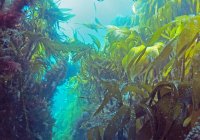
Will climate change affect Norwegian kelp forests in a positive way?
Climate change, including acidification of the oceans, will likely affect many of the plants and animals in our sea and oceans. Fresh research results indicate that kelp could be favoured by some of the changes.
News article
NIVA at SETAC
NIVA scientists will be attending the Society for Environmental Toxicology and Chemistry (Setac) European meeting in Rome from the 14th until 17th May 2018. A list of the platform presentations and posters being presented by NIVA researchers are given below. If you are attending, please reach out to one of our scientists if you would like to discuss future collaborations with NIVA or if you have any questions about our research.
News article
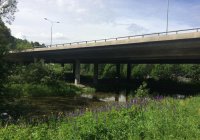
Wildlife in the ditches need a detox cure
When it´s raining on the roads, slops of road dust and contaminants drain into the road trenches. What does it do to wildlife living by the road?

News article
Chemicals are leaching from Norwegian roads and tunnels
Despite national objectives of reduced use and substitution of hazardous substances, more than two hundred tons were still in use in transport related products in Norway in 2012. Which chemicals are they, how exposed are we humans, and do they leak out to the environment? Newly published research provides some answers.
News article
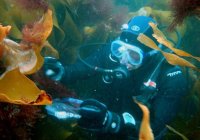
What you wanted to know about kelp but were afraid to ask
Kelp Forests are underwater ecosystems formed in shallow waters. Although they look very much like plants, kelps are actually large brown algae. Kelp forests have been described as one of the most ecologically dynamic and biologically diverse habitats on the planet. View this short video from the Norwegian Blur Forest Network (NBFN) to be enlightened.
News article
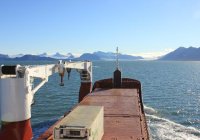
26,9 million NOK to use ships of opportunity for marine and atmospheric research
The Research Council of Norway has allocated almost 27 million NOK to the NIVA-lead project within Research Infrastructure, NorSOOP, for the period 2018-2024. The objective of NorSOOP is to support oceanic and atmospheric research and observations, and to help find ways to detect and manage human impacts on the ocean.
News article
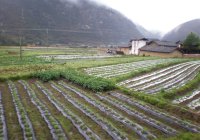
New financial tools to fund restoration of contaminated soils and sediments
New financial tools and sources must be harnessed to fund soil restoration and remediation projects to improve communities’ health, according to a new series of reports from a coalition of researchers from the International Institute for Sustainable Development (IISD), the Norwegian Institute of Water Research and the Chinese Academy of Environmental Planning (CAEP).
News article
Report: Precence of microplastics in Norwegian drinking water are close to zero
There are very low levels of microplastic in the water from Norwegian waterworks, according to a report conducted by Norwegian Water. The Norwegian Institute of Public Health concludes that this does not pose any health risk. The Norwegian Institute of Water Research (NIVA) has carried out the analyzes and the scientific work.
News article
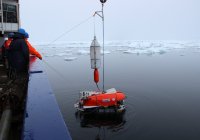
NIVA will study hot vents 4000 meters under the Artic ice
The HACON project will provide the first comprehensive study of deep (4000 m) hydrothermal vent ecosystems under ice in the Arctic region. HACON targets a key missing piece of the global vent biogeographic puzzle in a region that remains mostly unexplored because of its remote and climatologically challenging location.
News article
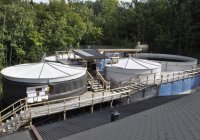
Successful tests for U.S. Coast Guard type approval with zero holding time
Alfa Laval has successfully completed additional tests at the Norwegian Institute for Water Research (NIVA) to verify the biological efficacy of Alfa Laval PureBallast 3 without holding time.
News article
Improved faunal status at the soft bottom in Skagerrak
Reductions of nutrients have led to a greater species richness at the seafloor in the Skagerrak after 1990. But warmer winter temperatures and increased river runoff might be the new challenges for the animal life at the soft bottom.
News article
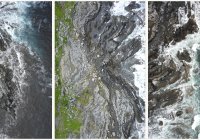
Researchers use drones to photograph seaweeds
Drones are the future for nature mapping and monitoring. – Compared to satellite pictures, drone images provide 1,000 times better image resolution and one million times more data points, says Kasper Hancke, marine biologist at NIVA.
News article
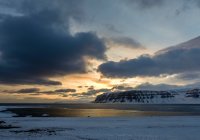
The long road from Arctic science to international law
The road to the Minamata Convention on mercury took almost 15 years and has been significantly influenced by Arctic research and Norwegian efforts. Why and in what way did Arctic research play such a significant role in this road towards the convention?
News article
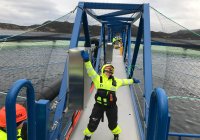
A sea lice free salmon prison
In October 2018, the first salmon were “imprisoned” in a brand new fish production prototype in Trøndelag, Norway. With a rigid steel construction and a water current generator included, the new fish cage Aquatraz will both prevent fish escapes and keep the fish in shape, while researchers from the Norwegian Institute for Water Research (NIVA) are monitoring the sea lice and water quality in the cage.
News article
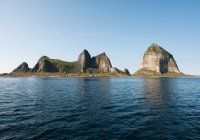
The Helgeland coast: worth its weight in gold
Nordic coastal ecosystems recently got a scientific health check. The Helgeland coast in Norway did well, according to Norwegian Institute for Water Research (NIVA).
News article
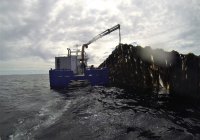
Researcher believes in kelp farming
By 2050, kelp farming along the Norwegian coast is estimated to cover an area corresponding to half the size of all farmed land in the country. The management agencies need to prepare.
News article
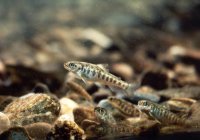
It is all in the genes: Decoding the effects of multiple stressors
Genomic markers are the key in a new approach for assessing the toxic effects arising from exposure to multiple stressors.
News article
Contamination of European seas continues despite some positive progress
A new European Environment Agency (EEA) report tells that between 75 and 96 % of the assessed area of Europe’s regional seas have a contamination problem.
News article
The Myanmar Norway bilateral Environmental Agreement proceeds to phase two
Myanmar has placed high priority on enhancing the protection of its biodiversity and habitats to conserve its natural heritage. However, ongoing deforestation and forests degradation have resulted in decreased forest cover, destruction of habitats and ecosystems, and loss of biodiversity. Norwegian institutions and Myanmar authorities are collaborating for improved environmental management. After four years, The Norwegian Institute for Water Research (NIVA) has been given the responsibility for coordinating the second phase of the program.