Search everything
Shows 5699 hit
News article
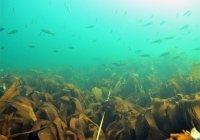
Turf Wars: The New Battle Front of Globally Declining Kelp Forests
For decades in Norway, the species rich kelp forests have been grazed down by sea urchins, leaving behind nothing but naked rocks. As a result of climate change, sea urchins along parts of the Norwegian coast are now on retreat, while the same climate changes are probably the cause of the new, big threat towards the global kelp forests: the rise of turf algae.

News article
JPI Oceans Knowledge Hub on the Integrated Assessment of Chemical Contaminants and their Effects on the Marine Environment
In a time of environmental awareness, spurred on by the possibility that our world is threatened by climate change, it is important to remember that there are other anthropogenic pressures, which are also essential for addressing the protection of the marine and coastal environment. Pollution is a global, complex issue that contributes to biodiversity loss and poor environmental health and comes from the production and release of many of the synthetic chemicals that we use in our daily lives. Chemical contaminants are often underrepresented as a major contributor of environmental deterioration.

News article
Relocation of NIVA’s head office in Oslo
We have grown out of our premises in Oslo Science Park and will during August 2021 move to Økernveien 94. The formal change of address will take place on 16. August.
News article
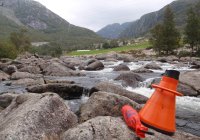
How are river ecosystems affected by regulation?
More and more rivers are regulated to serve human needs such as flood protection, transport, irrigation, hydropower generation or drinking water supply. Do altered flow dynamics affect organisms that inhabit the river bottom? And how does river flow interact with other ecosystem stressors like acidification or nutrient enrichment? A recent research project combined a flume experiment with findings from 64 regulated and unregulated river sites in Norway and Germany to find the answers.
News article
A new approach to amplifying DNA; A small paradigm shift within molecular photocopying
Analyzing DNA is useful for a number of vital applications. This includes diagnosis and monitoring of diseases, identification of criminals, and studying the function of a targeted segment of DNA. However, methods used for analyses often require more DNA than may be available in a typical sample. ‘Therefor, amplification is necessary, but not always straightforward. The most widely used amplification or photocopying method is the polymerase chain reaction (PCR). A new PCR method could help the amplification process, and thus develop robust assays that previously would not have been possible.
News article
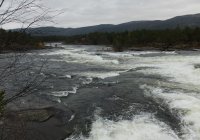
Effects of multiple stresses hydropower, acid deposition and climate change on water chemistry and salmon populations in the River Otra, Norway
In order to predict and manage the long-term health and status of the Otra river's salmon populations, a new study has considered acidification as part of a multiple stress combination affecting the river alongside hydropower and climate change.
News article
Despite dead zones and algal blooms – the Baltic Sea is recovering
The improvements are according to a study carried out by Danish, Swedish and Finnish scientists a direct result of reduced inputs of nutrients.
News article
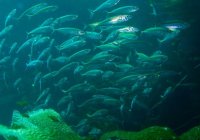
Over Half of Fish Stocks Worldwide Are Missing the Opportunity to Maximize Sustainable Yields
New research published today in Conservation Letters finds that over half of fish stocks are below levels that would yield greater long-term catches, enhance food security and avoid overfishing. Of those fish stocks, over a third are at 80 percent below sustainable catch.
News article
What time is it? The Arctic charr’s inner clock meets the midnight sun
Below ice and snow, in pitch dark, Arctic charr’s circadian clock still ticks with precision. The exception comes during the darkest and brightest weeks of the year, when daily activity rhythms break down.
News article
Used silicone breast implants can reveal our polluted bodies
Researchers from the Norwegian institute for Water Research (NIVA) have discovered that used breast implants can be used to measure persistent environmental pollutants in human bodies.

News article
Happy New Year
niva.no has undergone changes to start the New Year fresh. Please contact us if you are missing any information.
News article
First Report of a Chinese PFOS Alternative Overlooked for 30 Years
Researchers from the Norwegian Institute for Water Research (NIVA), in collaboration with their Chinese colleagues, recently found a new chemical compound which has evaded the attention of environmental research and regulation for several decades.
News article
Norwegian Competence Network on Blue Forests Established
The Norwegian Institute for Water Research (NIVA), GRID-Arendal and the Institute of Marine Research (IMR) have become the pioneering founders of a new Norwegian initiative to strengthen and share national competence on ‘blue forest’ habitats.
News article
A Call for Deep Ocean Stewardship
The world’s deep ocean spans more than half the planet. Humankind needs and depends upon many of the deep ocean’s treasures, and the race is already on to exploit them.
News article
6th Norwegian Environmental Toxicology Symposium
Assessing and solving environmental challenges in a multiple stressor world.
News article
NIVA Denmark is up and running
September 1st 2014, NIVA Denmark was formally established. On September 3rd, this regional office hosted a meeting in the Danish Society for Marine Biology (DSFMB).
News article
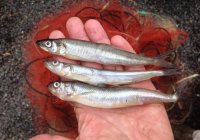
Environmental pollutants in large Norwegian lakes
Data from Norwegian monitoring programs make the basis for a suggested EU ban of certain chemicals in personal care products.
News article
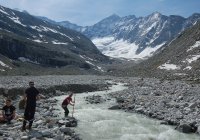
Mapping the global impact of shrinking glaciers on river invertebrates
River invertebrates react the same way to decreasing glacier cover wherever in the world they are, say scientists who have evaluated more than one million of them in diverse regions with shrinking glaciers, to determine the impact of global environmental change.

News article
Caution on the use of aquaculture medicines
Current environmental risk assessment data requirements are not sufficient for all aquaculture medicines.
News article
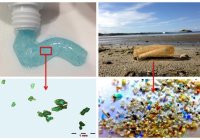
95% of Fulmars in the North Sea Had Plastic in Their Stomachs
Plastic in the form of very small particles, so-called ‘microplastic’, pollutes much of the marine environment. Scientists find microplastics in the majority of samples collected from the world's oceans.